SERVICES
Groundwater Survey & Borewell Point Identification
Scientific groundwater surveys to choose where to drill: electrical resistivity testing, geological layer mapping and rock and soil analysis.
- Written, itemised quote
- Partner rig operators across India
- Call or WhatsApp a person
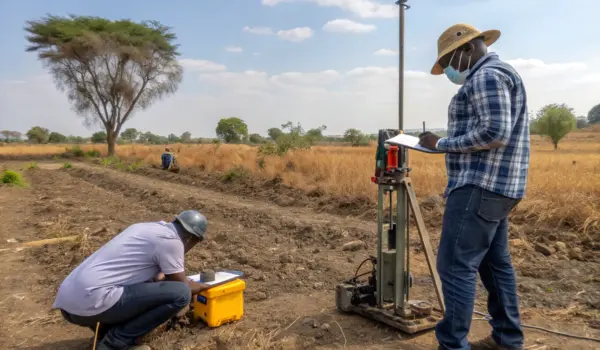
What the survey covers
- Electrical resistivity testing
- Geological layer mapping
- Rock and soil structure analysis
- Underground water-flow pattern detection
Why survey first
A survey identifies the most promising water-bearing zone and reduces the chance of a dry or low-yield borewell. It is not legally required, and you can still choose your own point, for example for Vastu reasons.
What it cannot do
No survey can guarantee water or a sustained yield. Ask what the survey includes, how the findings will be reported and what uncertainty remains.
BEFORE YOU BOOK
Have these ready for a quick quote
- Exact location and access for the rig vehicle
- Use: home, farm, commercial or industrial
- New borewell, rebore, or a problem with an existing one
- A written, itemised quote before work starts
Availability and the rig date are confirmed once we know your location and requirement.
STEP BY STEP
How it works
From your first call to a working borewell.
01
Call or WhatsApp
Tell us the location, the type of site and what you need. Send a photo if you like.
02
Site visit & survey
We check rig access and, if you want one, survey the ground to mark the drilling point.
03
Drilling, casing & yield test
Drilling to the agreed depth, casing fitted, flushing, and the yield measured in LPM.
04
Pump & handover
The right pump installed, the borewell commissioned and the work documented.
Is a groundwater survey necessary before drilling?
It is not legally required, but a scientific survey (electrical resistivity and geological mapping) improves the chance of finding a high-yield point and helps avoid dry borewells. Many customers still choose their own spot, for example for Vastu reasons, and we drill where you decide. No survey can guarantee water.
How deep should a borewell be in India?
Homes and apartments usually need 150–600 ft, and farms 600–1,200 ft or more. The final depth in India depends on the water table and the local geology at your plot, so agree the target depth and the per-foot rate for each depth stage before drilling starts.
What happens if the borewell does not give enough water?
Groundwater and yield cannot be guaranteed by any contractor. Before drilling, agree how deep to go, when to stop, and how the work will be charged if the yield is low, so there are no surprises.
What is the borewell drilling cost per foot in India?
Published ranges on this site run from about ₹80 to ₹250 per foot for most homes and farms (up to ₹280 for heavy industrial drilling). The rate for a site in India depends on depth, soil and rock hardness, borewell diameter and rig type (DTH or rotary). Ask for a written quote that lists drilling, casing pipe, rig transport and any pump work separately. You can use the cost worksheet to compare quotes.
Do I need permission to drill a borewell in India?
Rules differ by state and sometimes by district; some areas need approval from the state groundwater authority or local body before drilling. Our state rules and guidelines page lists what we have published for each state. The property owner is responsible for approvals, and we can tell you what we know before you book.
How do I get a quote?
Call, send a WhatsApp message or use the quote form with your location, the type of property and what you need. We reply with the next steps and a quote for your site.
TALK TO A PERSON
Speak to someone who drills borewells
No forms needed. Call, send a WhatsApp message or a photo of your site, and you will talk to a person who knows rigs, rock and pumps.
MORE SERVICES
Other borewell services
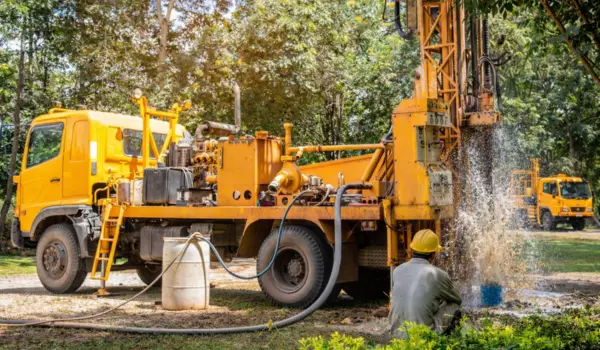
Borewell drilling
DTH, rotary and slow-rig drilling for homes, farms, apartments, commercial sites and industry, in 4.5", 6", 6.5" and 8" diameters.

Pump installation
V3, V4, V6 and V8 submersible, jet and compressor pumps, sized to your bore depth, water levels and expected yield.
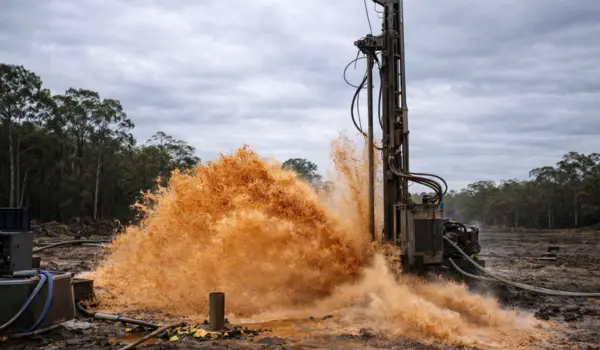
Flushing & cleaning
High-pressure compressor flushing, chlorine disinfection and removal of sand, silt and debris from old or low-yield borewells.